顯示具有 BIOLOGIC 標籤的文章。 顯示所有文章

2012年12月10日 星期一

illumina experiment

www.perkinelmer.com/pdfs/downloads/CST_RGHS_UK_NGS_Magrini.pdf
1. We sholud the data content Reference: NGS Sample Prep Challenges


2012年12月8日 星期六

Transcription factor


1. What Transcription factor  ??

In molecular biology and genetics, a transcription factor (sometimes called a sequence-specific DNA-binding factor) is a protein that binds to specific DNA sequences, thereby controlling the flow (or transcription) of genetic information from DNA to mRNA.Transcription factors perform this function alone or with other proteins in a complex, by promoting (as an activator), or blocking (as a repressor) the recruitment of RNA polymerase (the enzyme that performs the transcription of genetic information from DNA to RNA) to specific genes


Referencee:
wiki
Advance

2012年12月5日 星期三

Primer and random primer

1. What is a primer?

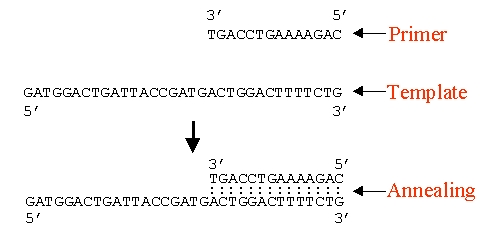
A primer is a short synthetic oligonucleotide which is used in many molecular techniques from PCR to DNA sequencing.  These primers are designed to have a sequence which is the reverse complement of a region of template or target DNA to which we wish the primer to anneal.   


Reference: What is a primer


2. What is a random primer?? 
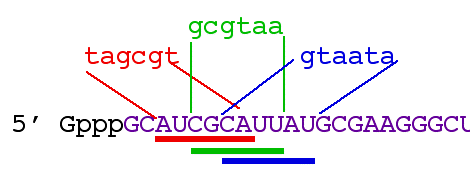
Random primers are short segments of single-stranded DNA (ssDNA) called oligonucleotides, or oligos for short. These oligos are only 8 nucleotides long (octamers) and they consist of every possible combination of bases which means there must be 48 = 65,536 different combinations in the mixture. Because every possible hexamer is present, these primers can bind to any section of DNA.


 Reference: random primer


3. More about primer

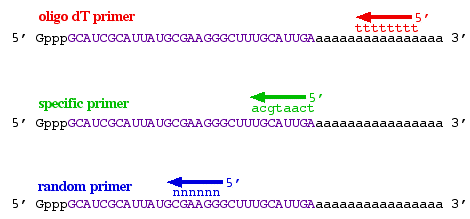
The only issue worth mentioning now is that three different types of primers can be used (figure 3). 1) 

  • If the mRNA has a poly-A 3' tail, then an oligo-dT primer can be used to prime all mRNAs simultaneously. 2) 
  • If you only wanted to produce cDNA from a subset of all mRNA, then a sequence-specific primer could be used that wil only bind to one mRNA sequence. 3) 
  • If you wanted to produce pieces of cDNA that were scattered all over the mRNA, then you could use a random primer cocktail that would produce cDNA from all mRNAs but the cDNAs would not be full length. 


The major benefits to random priming are the production of shorter cDNA fragments and increasing the probability that 5' ends of the mRNA would be converted to cDNA. Because reverse transcriptase does not usually reach the 5' end of long mRNAs, random primers can be beneficial


Reference: primer and CDNA


CDS and exon relationship

1. what is cds?

the gene coding sequence. and is composed of many exon.


Refernece:
What's the difference between CDS and ORF?

2010年7月17日 星期六

1. ALU
Alu sequence:

1、分布:

散佈於靈長類,老鼠的genomic DNA。人類的基因組中約有30萬分以上的Alu分散在基因組中,全部Alu佔人類基因組中的5﹪。

2、特性:

a、 約150-300bp DNA,為高度重複(highly repetitive)序列。人類genome有長短不一的Alu形成Alu家族,有些短的序列僅10bp類似Alu存在基因之間或intron內部。

b、 通常具有一段AGCT能被限制脢Alu I認定。

c、 隨種類不同,兩端是7-21bp的直接重複。

d、 Alu也是一種逆轉移子,Alu先轉錄成RNA,真核細胞中能也反轉錄脢,能將Alu RNA轉錄成Alu DNA在插入基因組中。Alu本身不會譯出蛋白質。


Reference:
http://brc.se.fju.edu.tw/nobelist/198x/p1983.htm